About me
I did not pick this up. I was raised in it.
Curtis Teare. Bird dogs, horses and gun dogs first; a board-and-train in Molino because this is home and I wanted to be back in it.
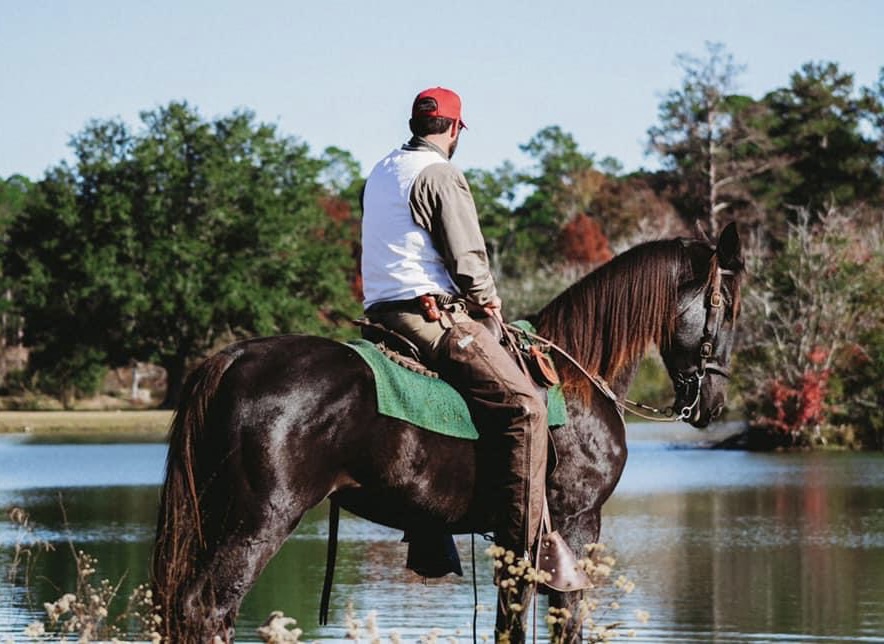
My father
He was the trainer you took a dog to in Pensacola, for twenty-seven years.
For twenty-seven years my dad was the premier dog trainer in Pensacola. If you had a dog on this end of the Panhandle between then and now, there is a fair chance he touched it.
I grew up in his kennel. I was carrying water buckets before I was carrying a gun, and I learned timing, pressure and honesty from watching him work — and from getting it wrong in front of him, which is a faster teacher. Nothing I know about a dog came out of a seminar.
He passed away two years ago. Leeward exists in large part because of him.

The years away
Wildlife management, high-end hunting, and a lot of windshield time.
I left the Gulf Coast to go do this at the level where the dog has to be right, because the client has paid for it to be right.
-
Wildlife management
Managing habitat and game on private ground: burning, planting, timber stands, managing water, and building places that hold wild birds instead of released ones. It changed how I train, because it taught me what a dog is actually up against.
-
High-end private hunting
Guiding and running dogs on premier private places across Alabama, Georgia and Texas. Paying guests, expensive expectations, and no room for a dog that only works on a good day.
-
Professional competition
Running and handling dogs at a high level all over the country — Georgia, Arkansas, Kansas, North Dakota, South Dakota. Competition is a brutally honest scoreboard. It tells you exactly which parts of your program are real.
-
Horses the whole way through
Bird dogs at that level are handled off a horse, so the horses were never a hobby. A horse tells you instantly when your hands are late or unfair. A dog is more forgiving, which is why so many people train dogs badly for years without noticing.
Coming home
I came back to be closer to family.
After my dad died, the math on being nine hundred miles from home for most of the year stopped working. So I came back, put the operation on fenced acreage in Molino, and built it the way I would want it if it were my dog going somewhere for a month.
Six dogs at a time, never more. One person doing the training, the feeding, the cleaning and the phone calls. Prices on the website. Pictures every day and a video every week, including the days that go badly. If you call two years from now, you get me, not a front desk.
What that means for your dog
Field standards, applied to a pet.
A competition dog has to be right in a strange place, in bad weather, with other dogs running, with people watching and with nothing in it for the dog at that moment. That is a much higher bar than “sits in the kitchen.”
So when I say a dog will hold a place command with a plate of food on the floor and the doorbell going, that is not a sales line. It is the low end of what I am used to asking a dog for.
It also means I will tell you the truth about your dog on the first call, including when the honest answer is that you do not need a four-week program, or that the problem is not the dog.
In the field, on foot
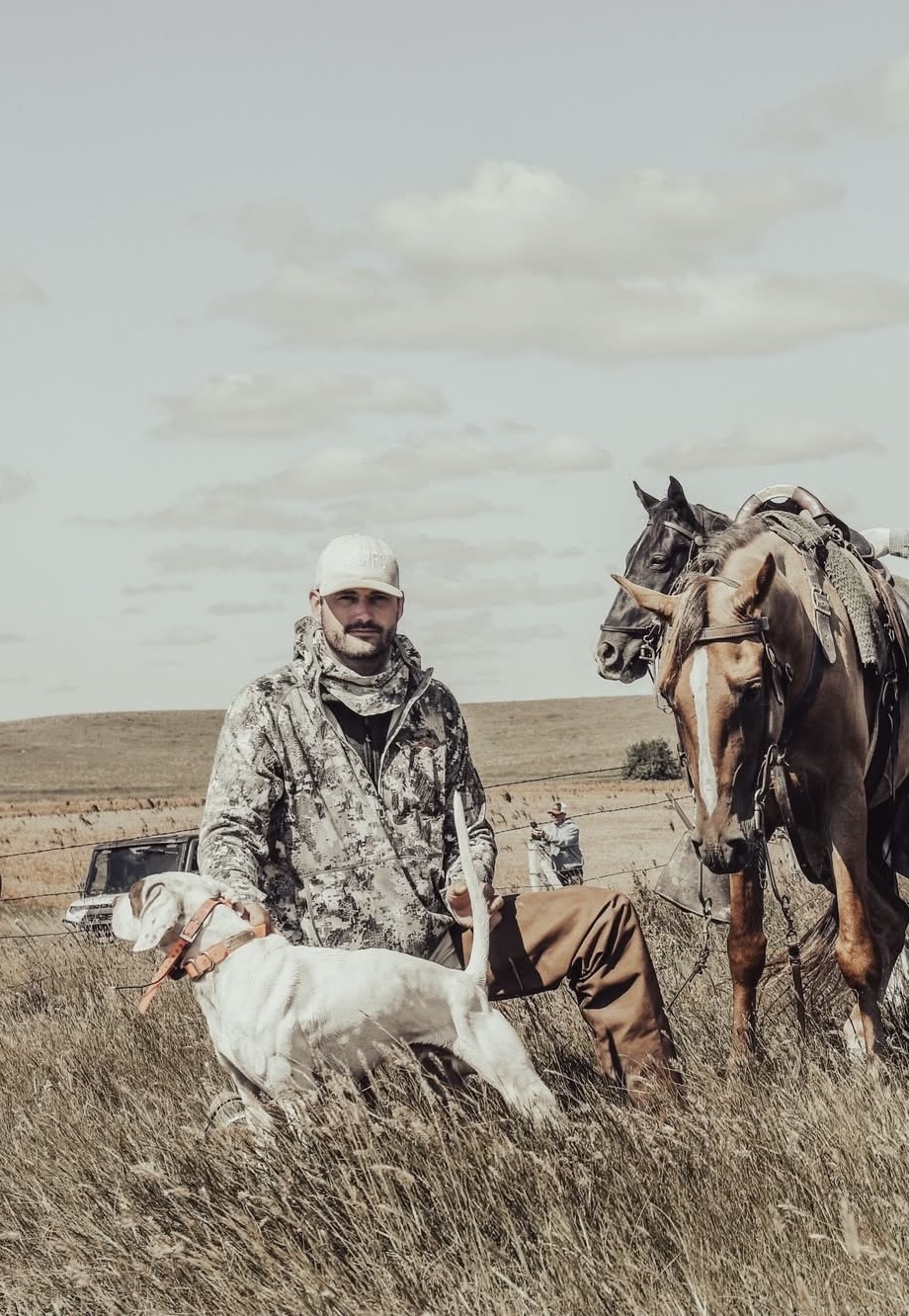
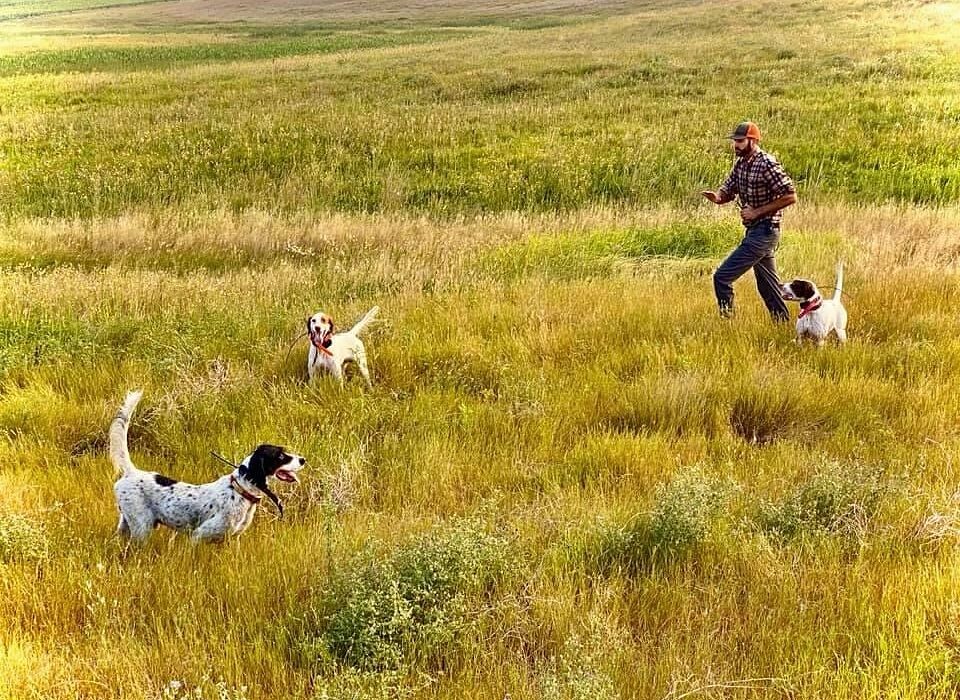 Walking in on a point with two dogs down. Whatever the dog is for, the work looks
like this: quiet, unhurried, and repeated until it is boring.
Walking in on a point with two dogs down. Whatever the dog is for, the work looks
like this: quiet, unhurried, and repeated until it is boring.
Six dogs at a time. Never more.
Tell me about your dog on a 20-minute call. If Leeward is not the right answer, I will tell you that on the call and point you somewhere better.
Currently booking: Call for availability